Monday, 6 February 2012

Who's the Smartphone OS Crash Champion?

The argument that iOS is a much more stable operating system than Android has been repeated on the blogs and even in the comment threads of stories about the two operating systems. There’s a problem, though: the data indicates that is untrue.

Mobile app monitoring company Crittercism released data Friday on crash reports from the period December 1 through December 15, and saying iOS has stability issues is putting it nicely. By a 2-to-1 margin, iOS crashes much more frequently than Android, according to Crittercism’s report. The biggest offender is iOS 5.0.1, accounting for 28.64 percent of all crashes.

By comparison, the most crash-prone Android operating system is 2.3.3, accounting for 3.86 percent of reports. That’s a huge difference and is sure to get the Apple blogosphere in an uproar over the survey’s methodology.

Yes, the firm’s work did have a disproportionate number of iOS devices in the test (162 million to 52 million for Android). However, to blunt that criticism, Crittercism split the data into quartiles, and looked at the crashes as a percentage of app launches.

The story is the same. In the top quartile, iOS apps crashed .51 percent of the time versus .15 percent for Android; in the second quartile 1.47 percent to .73 percent; and in the bottom quartile 3.66 percent to 2.97 percent. The data favors Android once again.

What’s causing the instability in iOS? It’s a good question without an easy answer. Apple’s walled garden approach in the App Store could leave a disproportionate number of users with outdated and buggy apps. Developers must wait to get updates approved by Apple just like the first time they submitted their apps; Android developers can choose to allow for auto-updating without any need for the Android market.

Even Apple’s iAd is at fault: Crittercism received reports that the Cupertino, California company’s advertising platform at times does not play nice with developers’ ads, causing instability.

One caveat: Crittercism’s data period is early enough that Ice Cream Sandwich crash data may not be accurately reflected. The firm says it expects the percentages of crashes on the newest version to increase significantly in future data sets.

Either way, the data puts to bed a misconception over the stability of Android, and raises new questions about iOS. Does Android have better quality developers, then? You might be able to argue yes.

crashes-ios-android-1

[Hat tip: Forbes]


Powered By WizardRSS.com | Full Text RSS Feed | Amazon Store Builder | Android Games | Hud Software

Source: http://feeds.pcworld.com/click.phdo?i=5b11ddb26d55e9f3ee01e8778020051e

bose earbuds bose wave radio bose quietcomfort 15 bose radios bose reviews

GenAudio Launches New Surround Format

January 20, 2012 | by Rachel Cericola

Faux surround sound is nothing new. Soundbars and other smaller audio solutions typically have some type of technology that can provide the “illusion” of surround sound, without a 5.1 (or larger) speaker setup. GenAudio is hoping to be the next great surround sound solution, with AstoundSound for CE.

This newly launched technology promises to deliver surround sound without all of the speakers. Designed to work with headphones and two speaker devices, GenAudio says that the tech can deliver a realistic 5.1 and 7.1 surround sound experience.

AstoundSound for CE is software-based, which is what allows it to reproduce those 5.1 and 7.1 sounds. The company says that this has an advantage over competing spatial audio technology, because AstoundSound for CE has no tone colorization and remains in-phase.

The company also says that the tech will work in everything from digital TVs and set-top boxes to phones and gaming consoles, and much more.

“The introduction of our software based audio IP tech on small, low-cost processors coupled with our intuitive audio tuning tools provides manufacturers a way to quickly integrate spatialized audio playback capabilities into any new product where audio fidelity to the consumer is a critical component,” says Jerry Mahabub, founder and CEO of GenAudio. “Implementing AstoundSound in consumer devices will offer device manufacturers the opportunity to differentiate their multimedia products in a crowded consumer market!”

GenAudio is already incorporating AstoundSound audio IP software into devices, including the Analog Devices ADAU1761/1701 Sigma Studio DSP system-on-chip (SoC) audio processors as well as ADI’s SHARC processors and various other chip manufacturers. GenAudio says that the first products packing AstoundSound for CE launch will debut early this year.


Powered By WizardRSS.com | Full Text RSS Feed | Amazon Wordpress Plugin | Android Forum | Hud Software

Source: http://feedproxy.google.com/~r/eh/rss/recentlyfiled/~3/ee4JOdy7LYw/

bose.com bose refurbished bose ipod dock bose lifestyle bose acoustic wave

Last Weekend’s Betaspring Hackathon: Netduinos, Arduinos, and Hungry Hippos

I spent the last weekend as an advisor to Betaspring‘s Digital Meets Physical Hackathon. The participants arrived Saturday morning and organized into teams. I stayed until about midnight, and returned around 10am Sunday morning, where I was able to help a couple teams get unstuck. It wasn’t that I was any smarter than them; I just had more sleep!

After Allan Tear of Betaspring kicked things off, he turned the stage over to James Rutter of AS220 Labs, who explained that the labs would be open all day for hackathon participants. AS220 is an unjuried, uncensored, all-ages arts center in Providence, and AS220 Labs combines a fab lab, community access to those tools, and other programs. AS220 Labs made their tools (such as a laser cutter and a couple of MakerBot 3d printers) available to participants that day.

After James gave an overview of the labs, Chris Walker from Netduino spoke. Chris had brought a bunch of Netduinos for participants to make things with. A Netduino plus became the heart of Betaspring’s own hackathon project: an Internet-connected doorbell. After Chris spoke, Kipp Bradford of KippKitts spoke; he brought some recently-created kits and parts (motor shields, driver boards, LEDs), and some other unusual items that proved useful.

After that, hacking began, and participants completed a number of projects:

  • Matt Gillooly’s Hungrypotamus. He hacked a Hungry Hungry Hippos game to be played over the Internet. Matt’s project was the Hackathon Champion. The project was controlled by the Arduino-compatible Teensy.
  • Chris Meringolo’s connected kegerator (pictured above). This system embedded an RFID tag into pint glasses, allowing you to control who gets beer, and keep an eye on how much they have (the Betaspring folks saw potential for a leaderboard there). Chris used an Arduino-compatible Freeduino USB Host Board as the brains.
  • Chris Perez and Simon Norridge engaged in a variety of LED experiments: an epoxy glow stick and LED-illuminated tip jar.
  • Ramsey Abouzahra, Damian Ewens, and Pat DeSantis worked on a scalable system for turning a building into a dancer-controlled (Kinect-enabled) light wall. They received the Most Ambitious Project award.
  • Betaspring (excluded from the competition) designed a Netduino Plus-based Internet enabled doorbell. Hackathon partner GreenGoose supplied some sensors for the hackathon. Betaspring used one in their project.
  • Ryan Rogowski and Rob Sanchez used an Arduino and a RedPark Serial Cable for iOS, along with a LED fretboard accessory they developed in partnership with KippKitts, to start work on an iOS app that would teach you to play guitar.
  • Topher Brown (winner of the Hardcore Prize) stayed all night and worked on an Internet-connected taillight (it fell off the back of a car). He’ll use it to indicate the status of various server devices at work.

Hacktastic Days(and Nights) at Betaspring

Flickr set


Powered By WizardRSS.com | Full Text RSS Feed | Amazon Affiliate Script | Android Games | Hud Software

Source: http://feedproxy.google.com/~r/makezineonline/~3/mBj5q52jgso/

bose ear buds bose 901 equalizer bose technical support headphones bose bose wireless

Sunday, 5 February 2012

Plywood Table is All Secret Compartment


Artists Naoki Hirakoso and Takamitsu Kitahara built this wooden surface called the Kai Table, complete with a bunch of “secret” compartments — probably more accurately described as storage compartments; they don’t seem too secret. [via Dornob]


Powered By WizardRSS.com | Full Text RSS Feed | Amazon Affiliate Script | Android Games | Hud Software

Source: http://feedproxy.google.com/~r/makezineonline/~3/RIGvj8asXtE/

bose products bose surround sound bose system bose wireless headphones bose headset

Presidential Campaign Mobile Websites Lack Savvy

Despite pronouncements that they are pro-technology, all of the U.S. presidential candidates have made fairly feeble attempts at building mobile campaign websites.

"It's appalling how poorly their mobile websites work," said Joshua Bixby, who has analyzed desktop and mobile websites of the Republican frontrunners and President Obama. Bixby is president of Strangeloop, a Canadian Web software company that has no connection to any of the campaigns.

In a blog post in which he shared his most recent findings about candidates' websites, Bixby says he encountered slow site load times -- some took several minutes on smartphones -- and basic functionality problems. Computerworld performed several of the same informal tests as Bixby did, and in some cases found even poorer performance than he did.

The findings suggest that politicians may not be doing a very good job of reaching out to voters who are using smartphones and tablets in far greater numbers than they were during the 2008 presidential campaign, Bixby says. He joined other election observers in predicting a big upsurge in campaigns focused on mobile device users.

MittRomney.com screenshot by iPhone 4."None of the candidates' sites rose to the challenge of designing for mobile devices," Bixby wrote in his blog. One key ingredient of a good mobile website is that it should offer the ability to link to the full desktop site, not just provide a view of a stripped-down mobile version, Bixby added in an interview. He said surveys have shown that at least one-third of mobile users strongly favor access to a full site from a mobile device.

What Bixby found was that of all the Republican presidential candidates, only Mitt Romney's campaign had designed a mobile site with a link to the full-size MittRomney.com website.

All of the other Republican candidates, as well as Obama, have adapted their full-size desktop websites to run on mobile platforms -- a tactic that can work well, or not, for many different reasons, Bixby said. In some cases, "responsive design" principles have been used, which means that developers have designed desktop content to adapt to a variety of devices, including tablets and smartphones.

Computerworld found that Obama's mobile website does include an apparent link to the desktop version of the president's campaign site, but clicking it repeatedly led to a page that said, "Sorry, the page you are looking for is not here."

BarackObama.com screenshot by iPhone 4.Bixby and others credited Obama's 2008 campaign for having a sophisticated digital operation that included a mobile strategy, but critics have noted that the president's 2012 website falls down, particularly for mobile users.

"It is on the iPhone where the trouble [with Obama's 2012 site] actually starts," wrote a blogger for TheBrickFactory.com . That blogger cited the same error message that Computerworld found when trying to jump to the full site, and also drew attention to the need to "scroll forever to access all the content," saying "Instead of being optimized for mobile, it feels like a version of the main site shoehorned to fit in a mobile browser ."

Bixby said the mobile version of MittRomney.com had a link to the candidate's full website that worked when he tested it multiple times. However, in a Computerworld test, the link to the full site repeatedly (ten times) returned the user to the mobile site. "That's a huge error," Bixby said of the Computerworld finding.

So it appears, at least in terms of the inability to link to a full website from the mobile site, that a Obama-Romney presidential contest is a close race.

Bixby also found that the candidates' websites loaded more slowly on desktop computers than many commercial websites did. But the load times on mobile devices were even slower, sometimes several minutes, he found.

Over a Wi-Fi connection, an iPhone loaded all of the candidates' sites in 10 to 20 seconds, according to Bixby. And he said that load times "ranged from slow to unbearable" on an Android phone connected to a Rogers 3G network in Canada. He noted that Romney's site loaded in 21 seconds on an Android phone via a 3G network, but the home screen failed to size properly in the browser, cutting off the candidate's name at "Romn." Bixby said it took several minutes to load the other candidates' sites on Android devices with 3G connections.

However, in Computerworld tests using an iPhone over a Verizon Wireless 3G network in Virginia, both Obama's and Romney's sites consistently loaded in less than three seconds.

Newt.org screenshot by iPhone 4.When it came to loading desktop Web pages, Republican candidate Newt Gingrich's site turned in the best performance, 7.7 seconds, while Obama's site came in last, at 13.6 seconds, according to Bixby.

But mobile devices are what people are interested in, and mobile strategies should be a higher priority for the candidates, Bixby said.

Bixby joined a number of independent analysts in urging the candidates to devote more of their campaign war chests to their mobile websites, given the explosive growth in mobile devices and the level of social interaction they support.

"Given the millions of dollars being spent on campaigns, mobile should be a higher priority," Bixby said.

Matt Hamblen covers mobile and wireless, smartphones and other handhelds, and wireless networking for Computerworld. Follow Matt on Twitter at @matthamblen or subscribe to Matt's RSS feed . His email address is mhamblen@computerworld.com.

Read more about mobile and wireless in Computerworld's Mobile and Wireless Topic Center.


Powered By WizardRSS.com | Full Text RSS Feed | WP Zon Builder Nulled | Android Games | Hud Software

Source: http://feeds.pcworld.com/click.phdo?i=5e3b7bd5edd4d8c79c3896293ad38cbc

bose bluetooth headset bose 2.1 bose support bose for ipod bose website

GenAudio Launches New Surround Format

January 20, 2012 | by Rachel Cericola

Faux surround sound is nothing new. Soundbars and other smaller audio solutions typically have some type of technology that can provide the “illusion” of surround sound, without a 5.1 (or larger) speaker setup. GenAudio is hoping to be the next great surround sound solution, with AstoundSound for CE.

This newly launched technology promises to deliver surround sound without all of the speakers. Designed to work with headphones and two speaker devices, GenAudio says that the tech can deliver a realistic 5.1 and 7.1 surround sound experience.

AstoundSound for CE is software-based, which is what allows it to reproduce those 5.1 and 7.1 sounds. The company says that this has an advantage over competing spatial audio technology, because AstoundSound for CE has no tone colorization and remains in-phase.

The company also says that the tech will work in everything from digital TVs and set-top boxes to phones and gaming consoles, and much more.

“The introduction of our software based audio IP tech on small, low-cost processors coupled with our intuitive audio tuning tools provides manufacturers a way to quickly integrate spatialized audio playback capabilities into any new product where audio fidelity to the consumer is a critical component,” says Jerry Mahabub, founder and CEO of GenAudio. “Implementing AstoundSound in consumer devices will offer device manufacturers the opportunity to differentiate their multimedia products in a crowded consumer market!”

GenAudio is already incorporating AstoundSound audio IP software into devices, including the Analog Devices ADAU1761/1701 Sigma Studio DSP system-on-chip (SoC) audio processors as well as ADI’s SHARC processors and various other chip manufacturers. GenAudio says that the first products packing AstoundSound for CE launch will debut early this year.


Powered By WizardRSS.com | Full Text RSS Feed | Amazon Wordpress Plugin | Android Forum | Hud Software

Source: http://feedproxy.google.com/~r/eh/rss/recentlyfiled/~3/ee4JOdy7LYw/

bose cinemate gs bose discount bose pa system bose remote bose noise cancelling

Presented By:

We were unable to forward you to the advertisement you clicked on.

The likely cause for this is that your browser, feed reader, or email application is configured to not accept cookies, or your reader may launch an external browser to view links without sharing cookies.

  • If you're using Internet Explorer, make sure your privacy setting is at medium or below.
    • Select 'Internet Options' from the 'Tools' menu in your browser window
    • Click the Privacy tab
    • Adjust your privacy setting if necessary
       
  • If you're using a reader that embeds Internet Explorer (examples: Microsoft Outlook, Outlook Express, Feed Demon), you'll also need to select Internet Explorer as your default web browser.
    • Open Internet Explorer
    • Select 'Internet Options' from the 'Tools' menu in your browser window
    • Click the 'Programs' tab and check the box for Internet Explorer to check if it is the default browser and save your change
    • Close your browser, re-open it, and when prompted, select Internet Explorer as your default
    • You can then click on an ad in your newsletter and visit the site you wish to view


Powered By WizardRSS.com | Full Text RSS Feed | WP Zon Builder Nulled | Android Games | Hud Software

Source: http://ads.pheedo.com/click.phdo?s=fda6025fcb5e6af9e102b94813651b9c&p=4

bose outlet stores bose stands bose speakers ipod bose wave music system bose headsets

Smartphone Sales Boom -- Who Needs A Laptop?

Will your next laptop be a smartphone? The idea isn't as crazy as it sounds. In the coming decade, mobile phones will gain capabilities that make them suitable replacements for the conventional desktop/laptop computer.    

Phones are already more popular than PCs. New research by Canalys shows that 2011 global smartphone shipments topped those of client PCs -- including desktops, laptops, netbooks, and tablets -- for the first time.

Canalys sales statistics (click to enlarge)

The development is a "significant milestone," says Canalys analyst Chris Jones.

"The greater availability of smart phones at lower price points has helped tremendously, but there has been a driving trend of increasing consumer appetite for Internet browsing, content consumption and engaging with apps and services on mobile devices," Jones says in a statement.

While Canalys expects smartphone growth to slow in 2012, as vendors focus more on premium handsets that command higher prices, there's no denying the fact that the mobile phone has become the world's preferred computing device.

Would today's smartphone make a suitable replacement for your laptop or desktop? Probably not. If you work in an office, for instance, and spend most your day buried in spreadsheets, documents, and presentations -- in other words, work that cries out for a large display and full-size keyboard -- the phone-as-PC concept doesn't cut it.  

A little less than two years ago, Motorola executive Sanjay Jha, who's now CEO of Motorola Mobility, predicted that smartphones would replace laptops in many enterprises within a few years. It's too early to say whether Jha's timing is spot-on, but technologies are emerging that bridge the gap between phone and PC.

Watch and Listen

Motion-sensing technologies such as Microsoft's Kinect may eventually migrate to smartphones, potentially freeing phone users from the fatigue of manipulating eye-straining screen keyboards, icons, and menus. 

In fact, Kinect's move to mobile devices is already under way. Asus is reportedly developing Windows 8-based laptops with Kinect sensors located above the screen where the webcam usually goes. 

True, it's unlikely that mobile users will want to gesticulate wildly in front of their phones, but Kinect, working in tandem with steadily-improved smartphone cameras, could hone its ability to interpret subtle gestures. There's certain room for improvement there.   

Voice recognition is another emerging tech that could render the laptop (mostly) obsolete. We're already seeing fledgling efforts in this area -- Apple's Siri voice controls in the iPhone 4S being the most obvious example. But speech input is just getting started, and the ever-increasing processing power of mobile CPUs will assist its development. Quad-core phones, such as the rumored LG X3 and HTC Endeavor, should arrive this year. And advanced mobile chips, including Qualcomm's Snapdragon S4 lineup with clock speeds from 1.5GHZ and 2.5GHz, are coming soon.   

Solving the Little Screen Problem

The smartphone's biggest weakness as a laptop-replacement PC is its tiny display. Even "gigantic" phones such as the Samsung Galaxy Note, with its 5.3-inch, 1280-by-800-pixel display, are tiny by laptop standards.

One possible solution: Built-in pico projectors that solve two ergonomic problems: small keyboards and screens. As demonstrated by the Mozilla Seabird concept phone, a projector-equipped handset could project a virtual keyboard on a tabletop, as well as a high-resolution image on a nearby wall. Motion controls could detect the user's keyboard-and-mouse actions. 

Smartphones with projectors are reportedly under development at Apple and elsewhere, but shipping models are hard to find. One example is the Samsung i8520 Beam, an $800 Android phone with a Texas Instruments DLP Pico Projector. (Two Fujitsu Lifebook laptops, the S761 and P771, have slide-out projectors as well). 

Pico projectors aren't ideal, however. What if there's no table, tray, or blank wall to project an image onto? And privacy concerns come into play. A laptop screen affords some degree of privacy, but a projected image is, well, out there for everyone to enjoy.   

You may be asking: What about tablets? Couldn't they replace laptops just as easily? Perhaps, but the issue of size remains with a tablet (some of them about the same dimensions as the sleekest notebooks). Smartphones, with their slim-and-light, pocket-friendly dimensions, are better suited in the long run to replacing the personal computer as we know it.     

Contact Jeff Bertolucci at Today@PCWorld, Twitter (@jbertolucci) or jbertolucci.blogspot.com, and follow Today@PCWorld on Twitter, too.


Powered By WizardRSS.com | Full Text RSS Feed | WP Zon Builder Nulled | Android Games | Hud Software

Source: http://feeds.pcworld.com/click.phdo?i=c1d12b0f57d3c0d5e11e79bb482f5f20

bose service bose iphone dock bose cheap bose desktop speakers bose stores

Saturday, 4 February 2012

Plywood Table is All Secret Compartment


Artists Naoki Hirakoso and Takamitsu Kitahara built this wooden surface called the Kai Table, complete with a bunch of “secret” compartments — probably more accurately described as storage compartments; they don’t seem too secret. [via Dornob]


Powered By WizardRSS.com | Full Text RSS Feed | Amazon Affiliate Script | Android Games | Hud Software

Source: http://feedproxy.google.com/~r/makezineonline/~3/RIGvj8asXtE/

bose acoustic wave bose ipod speaker bose cinemate bose sounddock bose portable

GenAudio Launches New Surround Format

January 20, 2012 | by Rachel Cericola

Faux surround sound is nothing new. Soundbars and other smaller audio solutions typically have some type of technology that can provide the “illusion” of surround sound, without a 5.1 (or larger) speaker setup. GenAudio is hoping to be the next great surround sound solution, with AstoundSound for CE.

This newly launched technology promises to deliver surround sound without all of the speakers. Designed to work with headphones and two speaker devices, GenAudio says that the tech can deliver a realistic 5.1 and 7.1 surround sound experience.

AstoundSound for CE is software-based, which is what allows it to reproduce those 5.1 and 7.1 sounds. The company says that this has an advantage over competing spatial audio technology, because AstoundSound for CE has no tone colorization and remains in-phase.

The company also says that the tech will work in everything from digital TVs and set-top boxes to phones and gaming consoles, and much more.

“The introduction of our software based audio IP tech on small, low-cost processors coupled with our intuitive audio tuning tools provides manufacturers a way to quickly integrate spatialized audio playback capabilities into any new product where audio fidelity to the consumer is a critical component,” says Jerry Mahabub, founder and CEO of GenAudio. “Implementing AstoundSound in consumer devices will offer device manufacturers the opportunity to differentiate their multimedia products in a crowded consumer market!”

GenAudio is already incorporating AstoundSound audio IP software into devices, including the Analog Devices ADAU1761/1701 Sigma Studio DSP system-on-chip (SoC) audio processors as well as ADI’s SHARC processors and various other chip manufacturers. GenAudio says that the first products packing AstoundSound for CE launch will debut early this year.


Powered By WizardRSS.com | Full Text RSS Feed | Amazon Wordpress Plugin | Android Forum | Hud Software

Source: http://feedproxy.google.com/~r/eh/rss/recentlyfiled/~3/ee4JOdy7LYw/

bose ipod dock bose lifestyle bose acoustic wave bose ipod speaker bose cinemate

Apple Pulls Ripoff Apps From its Walled Garden

Apple perhaps knows better than any company that app ripoffs are everywhere.

The consumer electronics powerhouse has been pulling several fake apps from its store as plagiarized apps have been a hot topic in recent days.

Here are some quick tips to help you protect yourself and separate the real from the fake.

--You should always be discerning when it comes to what applications you install on your computing devices, even if they come from the Apple App Store. Even malicious code has made it in.

--Before downloading anything from Apple or the Android Market, take a good look at the reviews other users are giving. Since disgruntled mobile users are usually quick to give feedback on apps, don't ever download anything with a one- or two-star rating.

While Apple is known for screening apps before they are allowed to sprout up in its walled garden, clearly fake apps do get in. Once they do, getting them out depends on developers who raise a fuss. In the meantime, some consumers get confused and shell out money thinking they're getting the real app, when they're actually buying a counterfeit.

This happens more often than you might think.

An app claiming to be the 4.0 version of Camera+ gained access and last month was busted as a fake. The real Camera+, created by developer Tap Tap Tap, is sold for the same price, but it's only at version 2.4.

In another recent development: The founder of Imangi Studios, one developer consternated by watching consumers download a ripped-off version of his popular Temple Run game for iOS, tweeted on Friday that "Apple has pulled 'Plants vs. Zombie', 'Angry Ninja Birds', and 'Zombie Air Highway' from the same seller but not 'Temple Jump' yet."

Plants vs. Zombie, for example, copycats a popular and legitimate app called Plants vs. Zombies. And Temple Jump is a complete rip-off of Temple Run, a free five-star app available in the App Store.

These fake apps and many more are the work of a developer called Anton Sinelnikov, reports The Guardian.

Follow Christina on Twitter and Google+ for even more tech news and commentary and followToday@PCWorld on Twitter, too.


Powered By WizardRSS.com | Full Text RSS Feed | Amazon Affiliate Script | Android Games | Hud Software

Source: http://feeds.pcworld.com/click.phdo?i=e4b1355f6e640613c28df54afaccb45c

bose car subwoofer bose qc15 review bose ie2 bose car stereo bose av18

Hot Deal: Sony NAC-SV10i Wi-Fi Speaker Dock: $109

January 20, 2012 | by EH Staff

Every iPod and/or iPhone needs a resting place. We’re not talking about the kitchen table or an underwear drawer. There are a lot of docking stations out there, which not only gives you a spot to put your portable, but can charge it for later use.

Adorama is currently selling Sony’s NAC-SV10I Wi-Fi Speaker Dock for $109. This price is 53 percent off the list price, and also includes free shipping. 

It’s a nice price for a nice product. Besides the charging, this docking station can also expand the use of that device—and a variety of other music. Plug your iPod or iPhone into the NAC-SV10i, and you blast music all over the house. For times when you don’t want to dock, the NAC-SV10i can wirelessly stream music from that device, as well as networked computers or the web. Sony also offers a free app that can transform that smartphone into a wireless remote.

Perfect for the kitchen, bedroom, office, or any other room in the house, the NAC-SV10i has DLNA support, BRAVIA Internet Music features, and PartyStream so you can sync with other compatible Sony products.

To get this discount on Adorama, log in and add the product into your shopping cart. That’s when you’ll see the discounted price. 


Powered By WizardRSS.com | Full Text RSS Feed | Amazon Wordpress Plugin | Android Forum | Hud Software

Source: http://feedproxy.google.com/~r/eh/rss/recentlyfiled/~3/GhIuFBJDxj0/

bose repair bose car speakers bose sound system bose car subwoofer bose qc15 review

Friday, 3 February 2012

2 Nights at an Automated Hotel with Control4

January 20, 2012 | by Lisa Montgomery

After a long day pounding the show floor pavement at the Consumer Electronic Show, it feels oh so nice to get back to the hotel room—even more so when that room is automated. I use the term “automated” loosely, as the only part of my two-night stay at the Aria that was truly automated was the first minute or so. As I entered the room for the first time, the drapes and sheers opened, music started playing the lights gradually brightened. Was I impressed? Yes. More than that, though, the welcome scenario made that smallish space seem a lot friendlier, and well, welcoming.

In typical Control4 style, wall-mounted keypads let me set groups of lights for reading, sleeping and waking up by just tapping a button. My favorite was the keypad by the door. Here, I could press a button to request that my room be serviced or that I not be disturbed. The appropriate icon by my door in the hallway illuminated to alert the Aria staff—kind of like hanging out a modern-day, electronic “Do Not Disturb” sign.

No Control4 system is complete without a touchpanel, and my room had one, as well as a hard-buttoned handheld remote. The touchpanel—the far sexier of the controls—happened to be on the nightstand by my side of the bed. Nice. My hubby got the remote. Both eager to test drive the controls, we started pushing buttons—in my case, icons. We toyed around with the window treatments, parting the shades half-way, leaving the drape open, closing both—any arrangement we could think of. The controls worked flawlessly. We played around with the lights, again, success. At times, the system got confused and devices failed to respond—we chalked it up to too many commands being thrown at it at the same time. Obviously, we needed to take turns.

If you need a little instruction in the use of the control system, Aria provides an online .PDF so you can study up before you arrive.

A nice feature of the Control4 system that came in particularly handy for my remote-wielding husband was the on-screen display. Using the buttons of the remote he could navigate the same interface that I could on the touchpanel. The only difference was that his interface showed up on the screen of the room’s ample-size flat-panel TV.

The main menu of this interface presented icons for controlling the motorized draperies, the lights, the thermostat, the audio and the video. The A/V should have been fun, but it ended up being quite frustrating. There were an awful lot of choices; scrolling through them was quite a chore, considering the “slow” response time of the Control4 system. I’d press a button; when I didn’t hear or see anything I’d naturally press the button again, which brought up a song I really didn’t want to hear or a show I really didn’t want to watch. Eventually, I learned to be patient—to let the system catch up with my commands. The same punch-and-wait exercise had to be applied when setting up a wakeup routine, which was one of the coolest high-tech features of my room. Using the touchpanel, I told the Control4 system to wake me up at 6 by opening the sheers and drapes, gradually bringing up the lights and playing music from a soft-rock station. It’s a much better way to wake up than to the sound of a blaring alarm.

All said and done—my stay was a hit. The automation system enhanced the luxurious design and atmosphere of the room. Once I was in that room, I never wanted to leave.


Powered By WizardRSS.com | Full Text RSS Feed | Amazon Wordpress Plugin | Android Forum | Hud Software

Source: http://feedproxy.google.com/~r/eh/rss/recentlyfiled/~3/HNEAeAVn0Jk/

bose av18 bose fm antenna

Symantec Warns of Android Trojans That Mutate With Every Download

Researchers from security vendor Symantec have identified a new premium-rate SMS Android Trojan horse that modifies its code every time it gets downloaded in order to bypass antivirus detection.

This technique is known as server-side polymorphism and has already existed in the world of desktop malware for many years, but mobile malware creators have only now begun to adopt it.

A special mechanism that runs on the distribution server modifies certain parts of the Trojan in order to ensure that every malicious app that gets downloaded is unique. This is different from local polymorphism where the malware modifies its own code every time it gets executed.

Symantec has identified multiple variants of this Trojan horse, which it detects as Android.Opfake, and all of them are distributed from Russian websites. However, the malware contains instructions to automatically send SMS messages to premium-rate numbers from a large number of European and former Soviet Union countries.

In some cases, especially when security products rely heavily on static signatures, detecting malware threats that make use of server-side polymorphism can be difficult.

"As with malware that affects traditional computing devices, the level of sophistication of the polymorphism used can affect how easy or difficult the threat is to detect," said Vikram Thakur, the principal security response manager at Symantec. "More complicated polymorphism requires more intelligent countermeasures."

In the case of Android.Opfake the level of polymorphism is not very high, as only some of the Trojan's data files are being modified by the distribution server.

"If antivirus vendors place their detection on the executable and non-changing sections, all files would be successfully detected," said Tim Armstrong, malware researcher at Kaspersky Lab. However, if the Trojan's executable code were also polymorphic, the challenge of detecting it would be more difficult, he said.

According to Armstrong, server-side polymorphism is not very widespread on the Android platform at the moment because most users get their apps through official channels and the current structure of the Android Market does not allow for a malware distribution scheme like this one.

However, he agrees that polymorphic Android malware could force antivirus vendors to step up their game in the future. "I think many of the features that are currently available on traditional platforms will start to arrive on these mobile platforms out of necessity as the criminals change their attack methods," Armstrong said.

There have been many new developments on the mobile threat landscape recently and increasing their attention towards smartphones is a logical move for malware writers, because they usually go where the money is, said Jamz Yaneza, research manager at antivirus company Trend Micro.

Users should become more aware of this fact and the capabilities of their mobile devices, which are now similar to those of mobile PCs, Yaneza said. "They should treat app downloads with the same caution as they do on desktops," and install or make use of whatever security add-ons they can as this creates another protective layer.


Powered By WizardRSS.com | Full Text RSS Feed | Amazon Affiliate Script | Android Games | Hud Software

Source: http://feeds.pcworld.com/click.phdo?i=adf778f2378faa1c682cd408c513e62f

bose ipod dock bose lifestyle bose acoustic wave bose ipod speaker bose cinemate

Plywood Table is All Secret Compartment


Artists Naoki Hirakoso and Takamitsu Kitahara built this wooden surface called the Kai Table, complete with a bunch of “secret” compartments — probably more accurately described as storage compartments; they don’t seem too secret. [via Dornob]


Powered By WizardRSS.com | Full Text RSS Feed | Amazon Affiliate Script | Android Games | Hud Software

Source: http://feedproxy.google.com/~r/makezineonline/~3/RIGvj8asXtE/

bose laptop speakers bose sound bar bose acoustimass bose radio cd bose store locations

2 Nights at an Automated Hotel with Control4

January 20, 2012 | by Lisa Montgomery

After a long day pounding the show floor pavement at the Consumer Electronic Show, it feels oh so nice to get back to the hotel room—even more so when that room is automated. I use the term “automated” loosely, as the only part of my two-night stay at the Aria that was truly automated was the first minute or so. As I entered the room for the first time, the drapes and sheers opened, music started playing the lights gradually brightened. Was I impressed? Yes. More than that, though, the welcome scenario made that smallish space seem a lot friendlier, and well, welcoming.

In typical Control4 style, wall-mounted keypads let me set groups of lights for reading, sleeping and waking up by just tapping a button. My favorite was the keypad by the door. Here, I could press a button to request that my room be serviced or that I not be disturbed. The appropriate icon by my door in the hallway illuminated to alert the Aria staff—kind of like hanging out a modern-day, electronic “Do Not Disturb” sign.

No Control4 system is complete without a touchpanel, and my room had one, as well as a hard-buttoned handheld remote. The touchpanel—the far sexier of the controls—happened to be on the nightstand by my side of the bed. Nice. My hubby got the remote. Both eager to test drive the controls, we started pushing buttons—in my case, icons. We toyed around with the window treatments, parting the shades half-way, leaving the drape open, closing both—any arrangement we could think of. The controls worked flawlessly. We played around with the lights, again, success. At times, the system got confused and devices failed to respond—we chalked it up to too many commands being thrown at it at the same time. Obviously, we needed to take turns.

If you need a little instruction in the use of the control system, Aria provides an online .PDF so you can study up before you arrive.

A nice feature of the Control4 system that came in particularly handy for my remote-wielding husband was the on-screen display. Using the buttons of the remote he could navigate the same interface that I could on the touchpanel. The only difference was that his interface showed up on the screen of the room’s ample-size flat-panel TV.

The main menu of this interface presented icons for controlling the motorized draperies, the lights, the thermostat, the audio and the video. The A/V should have been fun, but it ended up being quite frustrating. There were an awful lot of choices; scrolling through them was quite a chore, considering the “slow” response time of the Control4 system. I’d press a button; when I didn’t hear or see anything I’d naturally press the button again, which brought up a song I really didn’t want to hear or a show I really didn’t want to watch. Eventually, I learned to be patient—to let the system catch up with my commands. The same punch-and-wait exercise had to be applied when setting up a wakeup routine, which was one of the coolest high-tech features of my room. Using the touchpanel, I told the Control4 system to wake me up at 6 by opening the sheers and drapes, gradually bringing up the lights and playing music from a soft-rock station. It’s a much better way to wake up than to the sound of a blaring alarm.

All said and done—my stay was a hit. The automation system enhanced the luxurious design and atmosphere of the room. Once I was in that room, I never wanted to leave.


Powered By WizardRSS.com | Full Text RSS Feed | Amazon Wordpress Plugin | Android Forum | Hud Software

Source: http://feedproxy.google.com/~r/eh/rss/recentlyfiled/~3/HNEAeAVn0Jk/

bose cheap bose desktop speakers bose stores bose ipod headphones bose repairs usa

Thursday, 2 February 2012

The Modular Electronic Drums of Nick Yulman

Nick Yulman, of NY Soundworks, recently debuted debuted his Index Boogie performance piece at PS1. The piece consists of various solenoid-powered noise makers, which Yulman calls either “Surface Poppers” or “Drum Beaters”. They’re designed to be modular music devices that can easily be mated to virtually any inanimate object.

Index Boogie uses these devices to play drums, books, and a glass beaker, allowing the user to quickly switch between various objects with different tonal characteristics. The devices are controlled by preset midi compositions that can be switched when Nick flips a book to different pages.

More:


Powered By WizardRSS.com | Full Text RSS Feed | Amazon Affiliate Script | Android Games | Hud Software

Source: http://feedproxy.google.com/~r/makezineonline/~3/ho0eB7ra898/

bose sounddock bose portable bose customer service bose computer speakers bose companion 5

AMD Fundamentally Shifts Chip Design Methodology

Advanced Micro Devices will take a fundamentally different approach to designing chips as it tries to move away from playing second fiddle to Intel.

The company will blur the lines between CPUs and graphics processors in future chip design cycles, with both units sharing a memory pool and running common software applications, said AMD CTO Mark Papermaster Thursday during a financial analyst conference speech that was webcast.

AMD is also opening up its chips for integration of third-party intellectual property, which is the best way for the company to offer customized chips for specific customer needs, Papermaster said.

"It's more quick, more agile and tailored to the problem they want to solve," Papermaster said. An example is the data center, where intellectual property in the chip can be mixed and matched with IP to help tailor chips for cloud, Web serving or high-performance tasks, Papermaster said.

The new chip architectural approach comes as AMD rebuilds its product portfolio and restructures its business model. The company appointed new CEO Rory Read just five months ago and Papermaster took on the role of CTO in October. Executives speaking at the analyst day event being held in Sunnyvale, California, continuously hit on the need to adopt a more "agile" business model that could respond quicker to customer needs.

AMD's current chips integrate CPUs and graphics processors based on the company's intellectual property. The CPUs and GPUs perform different functions and run different software code -- for example, antivirus software is processed on CPUs and not on GPUs. The more resource-intensive graphics applications like Adobe Flash are offloaded to GPUs, freeing up CPUs to process other tasks.

AMD's new chip design, called HSA (heterogeneous systems architecture), will reach maturity by 2014 with 64-bit addressing, virtual memory, better internal bandwidth and software taking advantage of both processing units, Papermaster said. A chip code-named Kabini for low-power laptops due in 2013 will see HSA at work, according to an AMD slide deck.

AMD is also leading the formation of an organization to bring software development tools so coders can write applications for HSA. The company hopes to open source the tools, and more details about its progress will be shared later this year.

"The way to really bring momentum ... is to bring the industry with us," Papermaster said.

Depending on whether partners buy into HSA, the new approach would allow AMD to tackle the chip market in a fundamentally different way from Intel, which controls the IP and sells the parts, said Charles King, principal analyst at Pund-IT, who was at the event.

"The sense I get here is that they're not going to be satisfied with being a follower," King said.

Opening up the chip to external IP has worked well in some cases, but questions remain on how effective a growth driver it will be for AMD's chips, King said.

Though details are lacking, this is a strategic announcement intended to set the company's direction for the future, King said.


Powered By WizardRSS.com | Full Text RSS Feed | Amazon Affiliate Script | Android Games | Hud Software

Source: http://feeds.pcworld.com/click.phdo?i=be0543a5afc0588ccb519a9f9be8dbb8

bose lifestyle 25 wireless bose speakers bose car audio bose corporation bose sound systems

GenAudio Launches New Surround Format

January 20, 2012 | by Rachel Cericola

Faux surround sound is nothing new. Soundbars and other smaller audio solutions typically have some type of technology that can provide the “illusion” of surround sound, without a 5.1 (or larger) speaker setup. GenAudio is hoping to be the next great surround sound solution, with AstoundSound for CE.

This newly launched technology promises to deliver surround sound without all of the speakers. Designed to work with headphones and two speaker devices, GenAudio says that the tech can deliver a realistic 5.1 and 7.1 surround sound experience.

AstoundSound for CE is software-based, which is what allows it to reproduce those 5.1 and 7.1 sounds. The company says that this has an advantage over competing spatial audio technology, because AstoundSound for CE has no tone colorization and remains in-phase.

The company also says that the tech will work in everything from digital TVs and set-top boxes to phones and gaming consoles, and much more.

“The introduction of our software based audio IP tech on small, low-cost processors coupled with our intuitive audio tuning tools provides manufacturers a way to quickly integrate spatialized audio playback capabilities into any new product where audio fidelity to the consumer is a critical component,” says Jerry Mahabub, founder and CEO of GenAudio. “Implementing AstoundSound in consumer devices will offer device manufacturers the opportunity to differentiate their multimedia products in a crowded consumer market!”

GenAudio is already incorporating AstoundSound audio IP software into devices, including the Analog Devices ADAU1761/1701 Sigma Studio DSP system-on-chip (SoC) audio processors as well as ADI’s SHARC processors and various other chip manufacturers. GenAudio says that the first products packing AstoundSound for CE launch will debut early this year.


Powered By WizardRSS.com | Full Text RSS Feed | Amazon Wordpress Plugin | Android Forum | Hud Software

Source: http://feedproxy.google.com/~r/eh/rss/recentlyfiled/~3/ee4JOdy7LYw/

bose portable bose customer service bose computer speakers bose companion 5 bose mie2

Facebook Unsure It Can Enter China Because of Government Regulations

China, one of the world's largest Internet markets, could be out of reach of Facebook because of the Chinese government's strict censorship policies, the company said in its filing on Wednesday for an initial public offering (IPO).

The company however continues to "evaluate entering China."

Analysts do not expect conditions to get favorable soon for Facebook in China. The market, which already has popular homespun social networking sites, is also moving to Twitter-like microblogs.

"China is a large potential market for Facebook, but users are generally restricted from accessing Facebook from China," the filing said. "We do not know if we will be able to find an approach to managing content and information that will be acceptable to us and to the Chinese government," it added.

Speculation on Facebook entering the Chinese market mounted in late 2010 when the company's CEO Mark Zuckerberg visited several major IT firms in the country. But to enter the country's market Facebook would have to abide by China's censorship laws, which force sites to delete content critical of the government. Besides Facebook, some other Internet sites like YouTube and Twitter are currently blocked in the country.

The Chinese government was always nervous about Facebook, said Bill Bishop, an independent analyst who watches the Chinese Internet market. Facebook's role last year as a forum for protestors to organize against governments in the Middle East and North Africa only cemented those concerns, he said.

"If Facebook wants to come to China, it would be great, but it's extremely unlikely to happen in the near or medium-term," Bishop added.

Facebook will also have to compete in a market already occupied by strong domestic players, said Mark Natkin, managing director for Beijing-based Marbridge Consulting. Some of these competitors include sites such as Renren, which features a user interface similar to Facebook, and had 137 million users as of Sept. 30.

But many of China's Internet users are moving away from Renren and other Facebook-like social networking sites and instead flocking to Twitter-like microblogs operated by local Chinese companies. Chinese users of these Twitter-like microblogs have reached 250 million users, according to the China Internet Network Information Center.

"From a competitive standpoint, the market has already moved on," he added.

In spite of being blocked in the country, Facebook still has some users in China. Beijing resident Shi Beichen, a Facebook user since 2006, said he visits the site by connecting through a virtual private network (VPN), which allows him to view sites blocked by Chinese authorities.

One reason he uses Facebook is because the site is free of censorship. He also likes the site because it allows him to synchronize his different Internet applications such as Tumblr and Instapaper on to one platform through Facebook, he said.

"I think Facebook will enter China. Zuckerberg wants to come. But it will be extremely difficult," Shi said, noting China's censorship laws and the popularity of social networking sites already operating in the country.

"Foreign Internet companies still don't quite understand the Chinese Internet market or its users' habits. Even if the companies don't involve themselves with sensitive topics, it will still be hard for them to succeed," he added.


Powered By WizardRSS.com | Full Text RSS Feed | Amazon Affiliate Script | Android Games | Hud Software

Source: http://feeds.pcworld.com/click.phdo?i=7f0c5553e3391ed9bedc99093706be14

bose stereo systems bose repair bose car speakers bose sound system bose car subwoofer

Wednesday, 1 February 2012

Music - CD and music reviews, news and clips - Boston.com

Sorry, readability was unable to parse this page for content.

Source: http://syndication.boston.com/ae/music

bose radios bose reviews bose.com bose refurbished bose ipod dock

What Facebook's IPO Means for Users

Facebook's decision to become a public company is seen as a bellwether for Web 2.0 stock offerings, but what will it mean for the social networking giant's 800 million users, and for the companies that build third-party apps for the site?

FacebookFacebook filed for its initial public offering (IPO) Wednesday afternoon, a move expected to raise it between US$5 billion and $10 billion. But it also means Facebook will come under greater public scrutiny, and it's likely to face intense pressure from investors to keep growing its business each quarter.

Industry analysts point to a few key areas where Facebook will seek to expand, through either in-house development or acquisitions. The changes could appear in what users are able to do on its site, and in how Facebook uses their data to make money.

Facebook will almost certainly improve the mobile experience for users. It has been explicit about its intention to "invest in new technologies so you have a great Facebook experience no matter where you go," as one company blog post put it.

Users can expect to see changes in the mobile experience sooner rather than later, said Brian Blau, a technology analyst at Gartner. "Facebook right now is a company that really has two experiences: desktop and mobile. Those experiences just in the past couple of months have started to look similar. You can see the direction Facebook is going."

The money raised through the IPO will also empower Facebook to mount a more serious challenge to its wealthy competitor, Google. Facebook could look to improve its search function in particular.

Patrick Moorhead, the founder of Moor Insights & Strategy and a former executive at AltaVista, put it this way: "If Facebook had one of the better searches, why would you have to leave Facebook?"

The company already gets one in four page views on the Web, but it garners just 10 percent of Internet ad revenue, said David Greenbaum, the CEO of BoostCTR, a marketing firm that specializes in search and social media platforms.

A better search function could help increase its share of advertising dollars. Greg Sterling, of Sterling Market Intelligence, said the utilitarian nature of search platforms helps account for the greater success of their advertisements.

"Facebook is a great communication tool," he said, "but in some ways it's not useful like search." When users go to a search site, he said, "they have tasks and they accomplish them. They're making reservations; they're buying things."

Facebook will almost certainly continue to make itself a friendlier ecosystem for third-party apps, several industry analysts said. In August, the company earned the dubious honor of "worst API" in a developer survey conducted by Trove, a photo aggregation service. In September, Facebook started pushing its new open-graph API (application programming interface), linked to its new Timeline feature. For users, that could mean a spate of new apps, for desktop and especially for mobile.

The hundreds of thousands of companies that rely on Facebook's APIs will see mostly upsides from the IPO, industry observers said.

"The money raised will be beneficial to the whole Facebook ecosystem," says Rebecca Lieb, a digital advertising and media analyst at the Altimeter Group. Facebook will also likely try to secure more partnerships to ensure revenue growth, according to some analysts. Several analysts think Facebook will need to make its APIs more stable; otherwise, as a public company, it may have to disclose execution problems that in the past it might have been able to conceal.

Facebook has made fledgling moves into commerce, and some analysts predict it will move more deeply into that area to sustain future growth.

In advertising, Facebook's chief selling point is matching sellers with potential buyers based on personal data. Facebook's culture is "to push the envelope on privacy," Sterling said, and as it looks to maximize ad revenue and offer new services, that tendency may intensify, he said. "But it's kind of an Achilles' heel for them, in that if they go too far they risk alienating users," Sterling said.

Others think users may get a bit of a reprieve from Facebook eroding their privacy. Colin Zick, a partner at Foley Hoag, suggests the greater public scrutiny afforded public companies could force Facebook to play nicer with its users. The SEC requires risks of data breaches be reported, for example.

"Facebook already takes advantage of users way beyond what I'd consider acceptable," said Gartner's Blau. But, he said, "they're in the business of making money, and they do that by exploiting all the private data that you and I dump into Facebook every day. I don't think there's any difference if they're public or private."


Powered By WizardRSS.com | Full Text RSS Feed | Amazon Affiliate Script | Android Games | Hud Software

Source: http://feeds.pcworld.com/click.phdo?i=b8cb389bc5a1f1ef9b74a618c0930fcf

bose technical support headphones bose bose wireless bose powered speakers bose audio

RFID Credit Cards Are Easy Prey for Hackers, Demo Shows

It's been known for some time that there are security issues associated with the increasing use of RFID tags in credit cards, but this past weekend afforded a fresh demonstration of just how easy it is for hackers to take advantage of them.

rfidOnstage at the Shmoocon hacker conference in Washington, D.C., Recursion Ventures security researcher Kristin Paget used about $350 in equipment to wirelessly read a volunteer’s RFID-enabled credit card and then encode its key data onto a blank card, as described Monday by Forbes.

Next, she used the fraudulent card and a Square Card Reader to make a payment to herself.

'Embarrassingly Simple'

Elaborate trick? Far from it: “This is an embarrassingly simple hack, but it works,” Paget told Forbes.

Essentially, it's possible because much the way the store's point-of-sale device reads the data on a contactless card wirelessly, so, too, can pretty much any RFID reader--through standard wallets and clothing, and regardless of the encryption or security measures that are in place, Paget said.

Today's contactless cards don't make the user’s name, PIN, or permanent three-digit CVV code wirelessly available, the report notes; they also use a one-time CVV code with each scan so as to prevent repeated fraudulent use. In six years of use, there reportedly haven't been any documented cases of this kind of fraud, either.

Still, Paget's demonstration shows how easy it would be for one or more hackers to scan numerous victims' cards, even just to use each of them once.

Three Seconds on 'High'

So what can you do to protect yourself and your business?

First, determine if any of your cards are RFID-enabled. PayPass and payWave, for example, are two of the leading names under which this technology is offered in the United States.

Assuming you do have one, there are a few steps you can take to protect it. Among the more drastic options, certainly, is toasting your RFID chip in the microwave--three seconds will kill it, Paget reportedly told Forbes. Of course, then you can kiss your contactless payment capabilities goodbye as well.

Duct Tape and Aluminum Foil

Recursion Ventures, meanwhile, is reportedly working on a high-powered protection device for RFID-enabled credit cards, but it's still in the prototype stages.

In the meantime, you could try one of today's RFID-blocking shields or wallets, which generally use aluminum or steel to keep out prying eyes. There are even instructions on the Web for how to give your existing wallet RFID-inhibiting protection using just duct tape and aluminum foil.

Though by no means invincible, steps like these may be your best bet for now, short of locking your card up in a safe place.


Powered By WizardRSS.com | Full Text RSS Feed | Amazon Affiliate Script | Android Games | Hud Software

Source: http://feeds.pcworld.com/click.phdo?i=1891b4f10594b106c260629bd32ddbbf

bose quietcomfort headphones bose outlet online bose lifestyle 35 bose oe headphones bose headphones review

Prison Sentences in Pirate Bay Trial Made Final as Supreme Court Refuses Hearing

The Swedish Supreme Court will not hear an appeal from the founders of The Pirate Bay against prison sentences and fines imposed by the Swedish Court of Appeals, the court said on Wednesday.

Over a year ago, the Court of Appeals sentenced Fredrik Neij, Peter Sunde, and Carl Lundström to 10 months, eight months and four months of jail time, respectively. The court also said they must collectively pay a 46 million kronor (US$6.7 million) fine.

The Supreme Court hears cases that are considered important for the direction of Swedish law enforcement, or when there are special circumstances. The court has reviewed the material in the Pirate Bay case and found that neither reason to hear the case exists, it said.

Separately, Gottfrid Swartholm Warg has been sentenced to one year in prison. Due to illness, Warg never showed up at the appeals trial, and recently had his verdict in the district court confirmed.

The Pirate Bay case has been contentious from day one, and not everyone thinks Wednesday's decision was the right choice.

"The Pirate Bay case is fundamentally important and it is unfortunate that the Supreme Court chooses not to hear the case," said Anna Troberg, leader of the Pirate Party in Sweden, in a statement.

The case has been handled inadequately since the raid back in May 2006, and it would have been desirable that the Supreme Court heard the case, she said.

The entertainment industry is happier. The verdict is a defining moment in the battle over copyright on the Internet, according to the industry-funded Antipiratbyrån (Anti-Piracy Office). The Supreme Court has made it clear that all involved are responsible for any violations, including those that deliver the Internet connection, said the industry group.

Now that the sentence has been confirmed, Antipiratbyrån will act against the nearly 150 illegal file-sharing services that have Swedish connections, it said.

Send news tips and comments to mikael_ricknas@idg.com


Powered By WizardRSS.com | Full Text RSS Feed | Amazon Affiliate Script | Android Games | Hud Software

Source: http://feeds.pcworld.com/click.phdo?i=c6db7c52195c216a86096f27676b00de

bose headphones amazon bose music system bose noise canceling bose lifestyle 25 wireless bose speakers

T-Mobile Caters to Small Business with New Services

T-Mobile may be a distant fourth in the wireless carrier race, but it’s scrappy. Bouncing back after its proposed acquisition by AT&T crumbled, T-Mobile is aggressively courting small business customers with a variety of services.

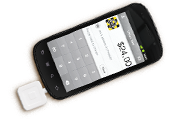
For starters, T-Mobile is the first of the wireless providers to start offering the Square credit card reader in its stores. The reader can be acquired for free directly from Square, but T-Mobile is helping small business customers expand their payment options and get paid faster by giving customers even easier access to it.

SquareT-Mobile is offering the Square mobile payment card reader in its stores.According to figures cited in the T-Mobile press release, consumers have a combined total 800 million credit cards between them, but 95 percent of small businesses are not equipped to accept credit card payments. For most, setting up a credit card merchant account is too complex, too costly, or both. But, accepting credit cards doesn’t get any easier than with Square.

I recently went to a local farmer’s market near my home outside of Houston. Although I was shopping at folding tables set up under tents in the middle of a parking lot, the majority of the vendors were able to accept credit card payments because they all had Square. The ones that were cash only, or the one that literally wrote all credit card info—including the three digit verification code from the back of the card—on a piece of paper to process later when they got back to the office were much less likely to get my business.

Square is just the beginning of what T-Mobile has to offer small business customers. Some devices, like the HTC Amaze 4G and Samsung Galaxy S II, come pre-loaded with the T-Mobile 4GPro App Pack. The App Pack is a collection of crucial business tools like DropBox, Evernote, Square, TripIt, and LinkedIn. Again, most of these apps are available for free, but T-Mobile is taking the guesswork out of the equation and equipping small business customers with the right tools by default.

T-MobileIt is a smaller wireless provider, but it tries harder.T-Mobile offers multi-line, pooled plans for small businesses. It also has an equipment trade in program that allows customers to trade unused mobile devices to offset the cost of acquiring new equipment, and it offers an Equipment Installment Plan (EIP) that enables customers to defer costs over an 18-month period.

To top it all off, T-Mobile is rolling out a new store format for its nearly 400 retail locations to improve the wireless shopping experience. For small business customers, the new T-Mobile layout includes areas to sit down with T-Mobile consultants for a mor in-depth analysis of your wireless needs and how to meet them.

Matt Millen, vice president of small and medium business sales at T-Mobile, sums it up well. “The success of our small business customers is important to us.”


Powered By WizardRSS.com | Full Text RSS Feed | Amazon Affiliate Script | Android Games | Hud Software

Source: http://feeds.pcworld.com/click.phdo?i=febab5db15d2f4b0fb8e9f33f79e7b3a

bose outlet online bose lifestyle 35 bose oe headphones bose headphones review bose dealers